Best Security Doorbell: AI Threat Prediction Cuts False Alerts
By Mateo Okafor • 28th Nov
The Reality Check Your Doorbell AI Needs: Cutting Through the Hype of "Threat Prediction"
In today's saturated market where every manufacturer claims to offer the best security doorbell, the phrase "AI threat prediction" has become tech marketing's newest magic trick. But when you're weary from false alerts triggered by mailbox shadows at 3 AM, you deserve more than glossy promises. Let's dissect what these systems actually deliver for good home security (without compromising your privacy or bank account). For a deeper dive into how analytics cut false alarms, see AI doorbell alerts.
Why Your Doorbell's "AI" Might Be Lying To You
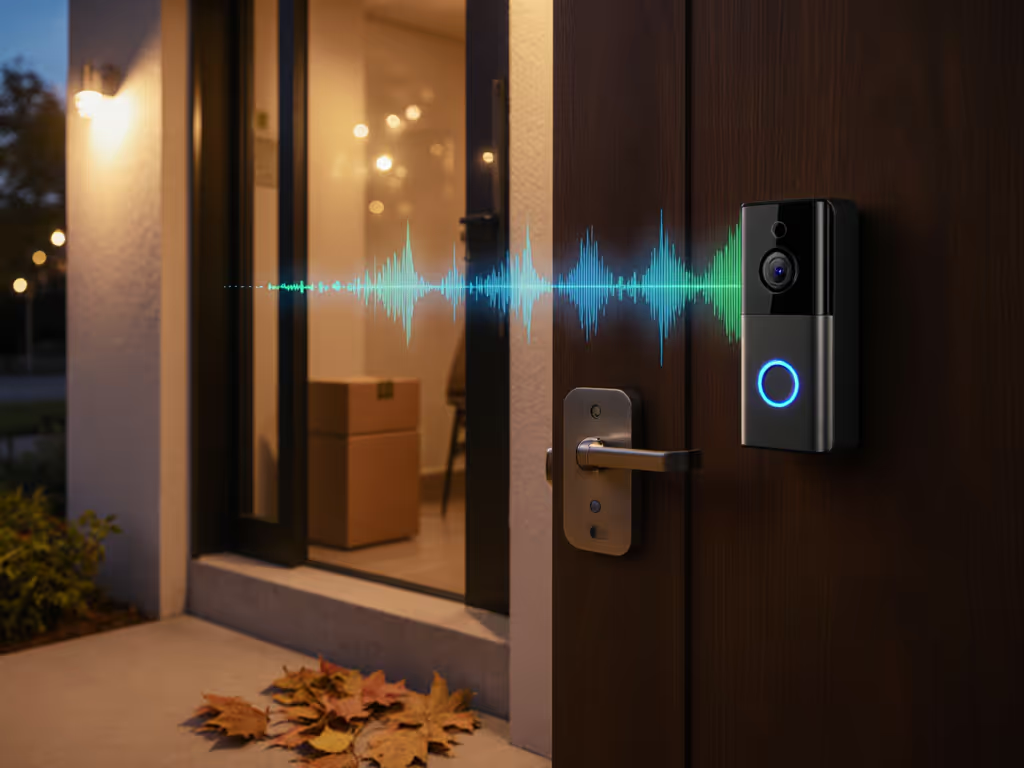
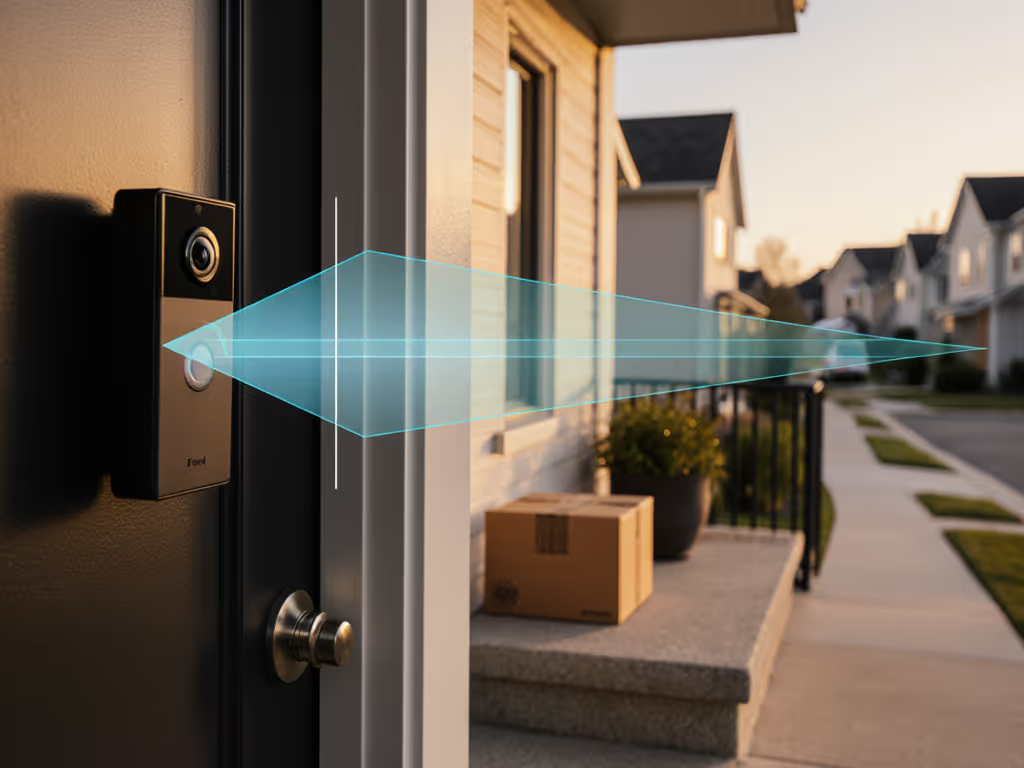
Manufacturers love to tout "smart" detection that separates "real threats" from passing squirrels. The reality? Most so-called AI threat prediction is just basic motion segmentation with marketing steroids. These systems typically use simplistic object classification (person vs. car vs. package) without true contextual understanding, meaning your doorbell still screams at every leaf blowing past your porch.
What you're actually getting is anomaly detection doorbell technology that compares current activity against a statistically derived "normal" pattern. But here's what no marketing video shows: when you live near a busy sidewalk or have overhanging trees, "normal" becomes nearly impossible to define. The result? Missed alerts during actual incidents and relentless notifications from routine neighborhood activity. And a lot of frustration.
Local-first when feasible.
The Behavioral Analytics Mirage
Terms like behavioral analytics security sound impressive until you examine the implementation. Most doorbells claim "learning capabilities," but they're simply accumulating motion patterns without understanding why activity occurs. Does your doorbell distinguish between:
-
A delivery person making a quick drop-off vs. someone lingering suspiciously?
-
A neighbor grabbing their newspaper vs. someone testing door handles?
True security pattern recognition requires contextual awareness that current consumer hardware simply doesn't possess. Without locally processed data that respects your specific environment (not a generalized cloud model trained on millions of homes), these systems remain fundamentally limited.
I recently helped a neighbor with a package theft investigation. Because my system stores encrypted local video and never auto-shares to the cloud, I could provide exactly the 67 seconds of footage needed, without exposing a week of their movements to some corporate server. This is why privacy isn't just ethical; it's practical security. Compare cloud vs local storage options to keep footage private without paying extra. As I've said before: Privacy is a feature, not a line in marketing.
The Subscription Trap Hiding Behind "AI"
Here's what manufacturers won't highlight in their commercials: the most "advanced" threat prediction features often require paid subscriptions that turn basic hardware into crippled demos without them. Check the fine print:
-
Basic motion detection (works without subscription)
-
Person/package detection (subscription required)
-
Threat prediction/anomaly detection (premium subscription tier)
This is vendor lock-in dressed as innovation. If you want to skip monthly fees, start with our no-subscription doorbell guide. You've paid $250 for a doorbell, yet core functionality gets gated behind recurring fees. The worst offenders disable all recording without a subscription, making your "security" device effectively useless after the trial period ends. Not a great deal.
What Actually Works for Real Porch Security
After analyzing dozens of doorbell implementations across apartment buildings, suburban homes, and small businesses, I've identified what genuinely reduces false alerts while maintaining privacy:
Local Processing Matters More Than "Cloud AI"
Devices with onboard processing for basic motion segmentation (like some newer models that support RTSP feeds) can distinguish between significant movement and background noise without sending your footage to corporate servers. Learn how edge computing doorbells speed up alerts while keeping data local. This local approach means fewer false alerts because it understands your specific environment, not some generic model trained on millions of homes.
Granular Control Trumps "Set and Forget"
Look for systems that let you define:
-
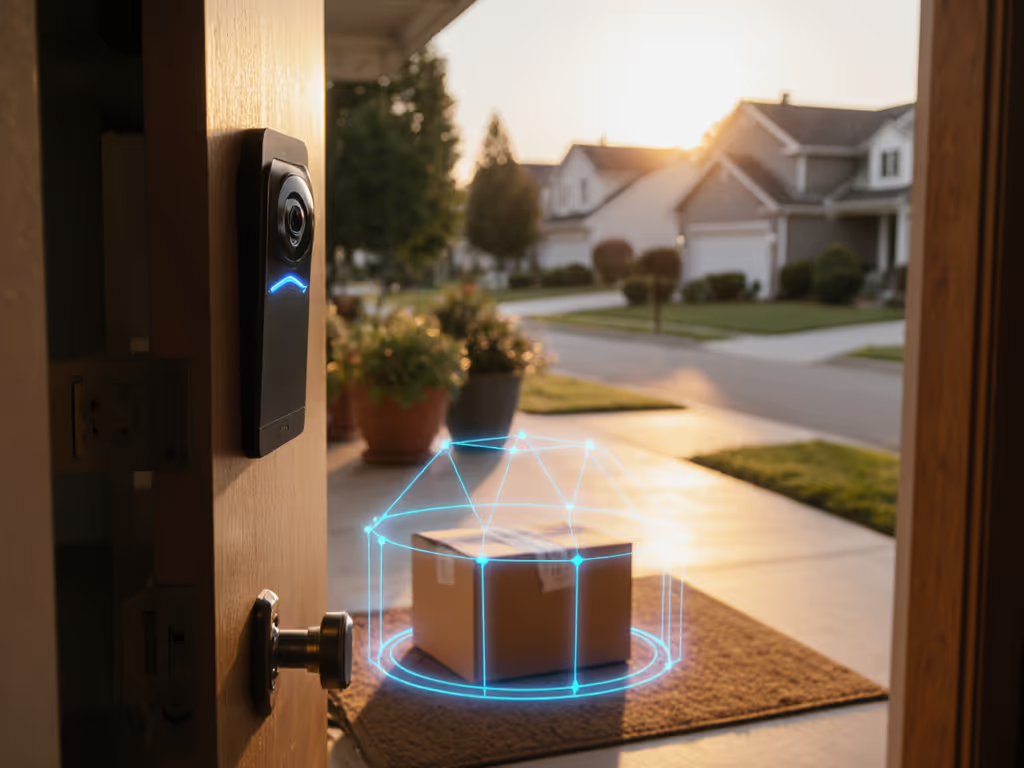
Activity zones (specific areas where motion matters)
-
Sensitivity thresholds (by object type and time of day)
-
Time-based rules ("only alert me for people between 9 AM-5 PM when I'm at work")
The Nest Doorbell ecosystem demonstrates this principle well, though its premium features require subscriptions that lock out essential functionality. When evaluating any system, ask: What control do I retain when the subscription ends? If the answer is "not much," keep looking.
Privacy by Design Is Non-Negotiable
Any doorbell worth considering must:
-
Offer local storage options (microSD or wired network storage)
-
Provide end-to-end encryption for all footage
-
Never default to sharing data with law enforcement
-
Allow selective sharing without platform account access
I've watched too many users discover (after installing) that their "secure" doorbell automatically shares footage with Ring's Neighbors app or sends data to third-party analytics firms. Lock down your setup with our doorbell privacy settings guide. Review privacy policies like you're reading a lease agreement, not marketing copy. It matters.
Making Informed Choices in a Hyped Market
When shopping for your next doorbell, cut through the AI hype with these practical questions:
-
"What functionality disappears without a subscription?" (If core security features vanish, walk away)
-
"Where is my footage processed and stored?" (Cloud-only processing = privacy risk)
-
"Can I export specific clips without sharing my entire account?" (Essential for package theft investigations)
-
"What happens to my data if the company changes hands or shuts down?" (Read the fine print on data ownership)
The best security doorbell isn't the one with the flashiest AI claims, it's the system you'll actually use consistently because it respects your privacy, your budget, and your sanity. Systems that prioritize local processing with optional cloud enhancements (not the reverse) deliver more reliable security without the subscription treadmill.
The Bottom Line: Security Without Surrender
True home security shouldn't require surrendering your footage to corporate servers or paying monthly fees for basic functionality. Look for devices that give you control, the ability to manage alert sensitivity based on your actual porch conditions, store footage where you decide, and share only what's necessary during actual incidents.
As someone who's analyzed how these systems handle identity, footage, and sharing, I've seen too many "smart" doorbells sacrifice real security for marketing points. When evaluating options, prioritize transparency over AI buzzwords and local control over cloud dependency. After all, the most sophisticated threat prediction means nothing if your system can't distinguish between a genuine security concern and the neighbor's cat, while silently shipping your footage to third parties.
Ready to dive deeper into evaluating doorbell security claims? Check our comprehensive comparison guide that tests actual false alert rates across different lighting conditions, neighborhood types, and subscription tiers, because your front porch deserves security that works in reality, not just in marketing demos.
Related Articles